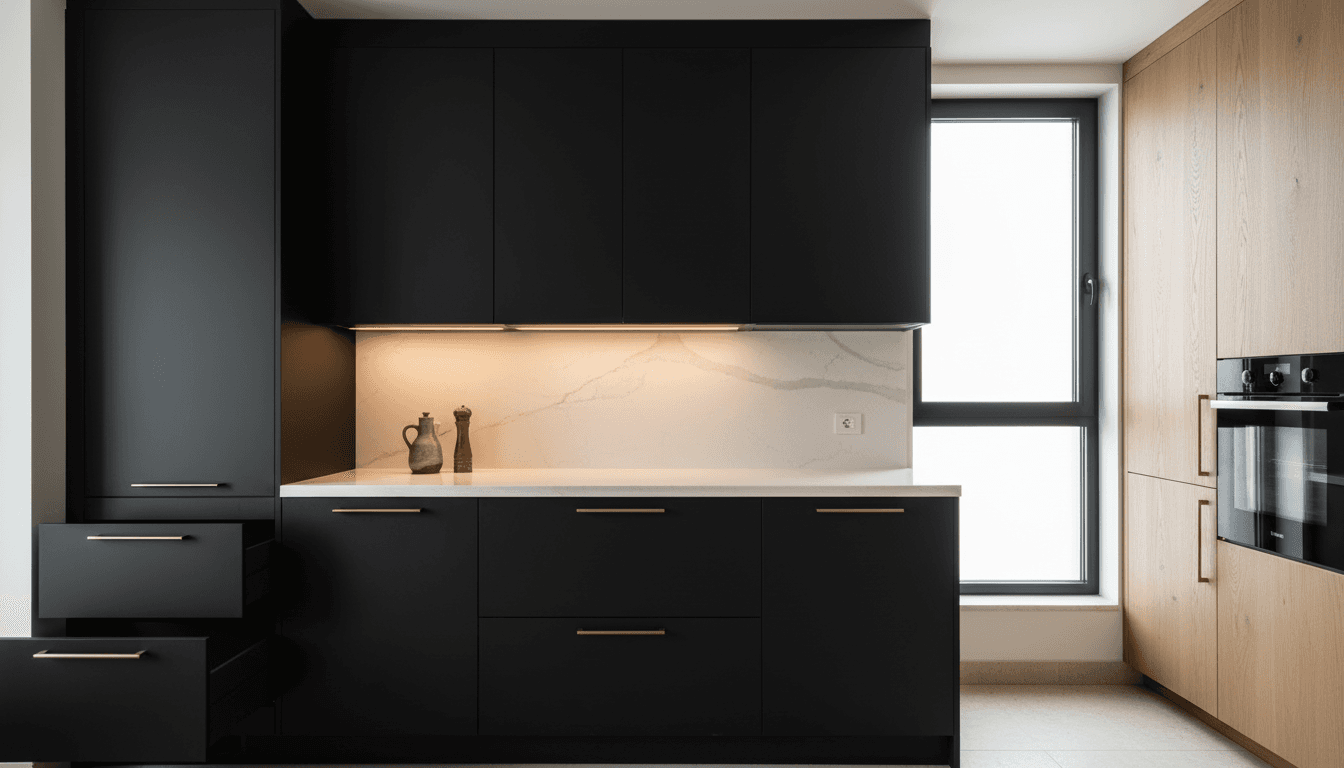
Matte black kitchens started as an Instagram-fueled design moment. Over the years some have argued the trend is over — but our order records say otherwise: in the first quarter of this year, demand for matte black is 18% above the same period last year. The trend hasn't faded; it has matured.
This article covers the right combinations and the most common mistakes for matte black kitchens, so you can make a choice that still feels right ten years from now.
Why matte black still holds up
Two reasons. First, matte black is not a characterless color — it has a clear stance and makes even a small kitchen read as premium. Second, fingerprints and dust show much less than on glossy black. Unlike glossy, matte tolerates daily life.
One of our top sellers is Matte Black Tall Cabinet Door — especially common in bulk orders from interior designers.
Right countertop pairing
Three countertop types pair best with matte black:
- White marble or marble composite: classic, strong contrast, restaurant-kitchen feel. Calacatta-style veined surfaces remain in demand.
- Plain white quartz: uniform, minimal. The safest combination for a modern apartment kitchen.
- Light grey marble: a softer transition, for the customer who wants neither full white nor full black. Photographs without harsh contrast.
Avoid: black on black countertop. It feels suffocating and makes the kitchen look small. Striking in photos, exhausting to live in.
Handle choice — small detail, big impact
Handles define the personality of a matte black façade:
- Brass / gold handle: the most requested combo, balancing warmth and premium feel.
- Matte black bar handle: full minimal, an “invisible” façade.
- Push-to-open (handleless): maximum premium feel, but expect slightly more frequent cleaning.
- Chrome / nickel: the look of the previous decade — rarely chosen now, reads as dated.
Lighting — matte black is deceptive in shadow
Matte black absorbs light; with raw lighting, the kitchen feels dim. Make sure to install all three: under-counter LED strip + ceiling spots + under-cabinet strip. A combination of 4000K neutral white + 3000K warm accent gives the doors the right tone.
In kitchens with little natural light, matte black can be risky. Workshop tip: lower cabinets in black, upper cabinets in a lighter tone (cream, white lacquer) → reflects light, preserves the lower character.
Will it still feel right in 10 years?
The biggest fears about matte black: “Will it go out of style?” “Will it hurt resale value?” Our field view: choices in the neutral family (matte black, white, anthracite grey) cause no resale issues. The real risk is a strong middle color — navy, deep green.
With a good countertop and proper lighting, matte black feels premium for a decade. If you ever want to refresh the look, you can replace just the doors; the body stays.
Enter your size, get the price in seconds.
Lacquer and membrane same tariff. See the instant total in the configurator and decide.
Frequently Asked Questions
Does dust show on matte black?
Very little. Where glossy black shows every speck, matte diffuses it. A weekly dry-cloth wipe is enough — no extra maintenance.
Is matte black suitable for a household with kids?
Yes. Matte membrane hides fingerprints and resists scratches. Even on the most-touched door, after a year of small-child traffic, the difference is barely visible.
How does matte black combine with wood?
Very well. Matte black upper cabinets paired with walnut or oak lower drawers is one of the strongest current trends. We frequently produce Walnut Wood Tall Cabinet Door + matte black upper combos.
Lacquer or membrane for matte black?
Both work. Lacquer gives a deeper black; matte membrane reads as more natural. A common combo: lacquer next to the oven, membrane elsewhere. Details: Lacquer or Membrane?.
We make lacquer, membrane and wood cabinet doors at our Istanbul workshop. Articles distilled from field experience — no AI clichés, just practical knowledge from real customer reports.